


Why Concrete Sinks
Understanding What Causes Concrete to Settle
If your driveway, sidewalk, patio, garage floor, porch, or pool deck has started sinking, you’re not alone. Uneven concrete is one of the most common problems homeowners face throughout Mid-Michigan.
The good news is that the concrete itself usually isn’t the problem.
In many cases, the slab is still structurally sound. What’s changed is the ground underneath it. As soil shifts, washes away, or compresses over time, the concrete loses the support it needs and begins to settle.
Understanding why concrete sinks can help you recognize problems early, avoid safety hazards, and choose the right repair before the damage gets worse.
Most Concrete Doesn’t Sink Because It’s Damaged
Many homeowners assume that a sinking slab means the concrete has failed.
That’s rarely the case.
Concrete is incredibly strong, but it depends on a stable base beneath it. Whether it’s a driveway, sidewalk, patio, garage floor, or front steps, every slab relies on compacted soil for support.
When that soil changes, the concrete moves with it.
This can lead to:
- Uneven sidewalks
- Sunken driveways
- Settling patios
- Front porch movement
- Garage floor cracks
- Pool deck trip hazards
- Interior slab settlement
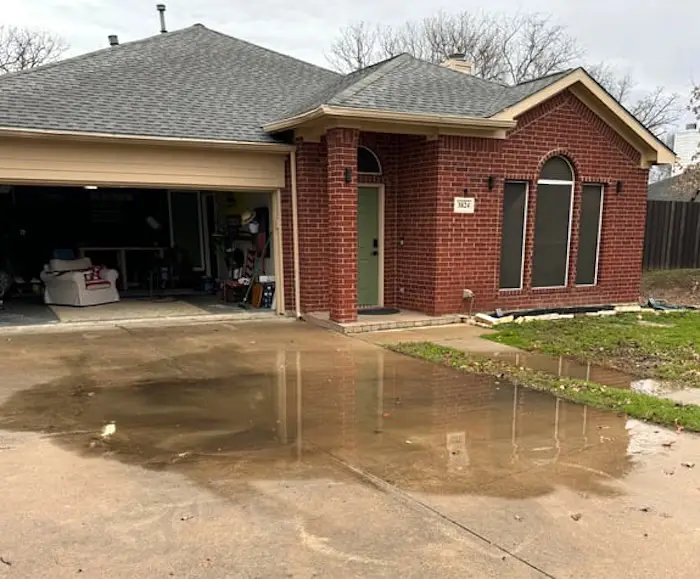
- Water collecting where it shouldn’t
The earlier these issues are addressed, the easier they are to correct.
What Causes Concrete to Sink?
Several different conditions can lead to concrete settlement. In many cases, more than one factor is involved.
Poor Soil Compaction
One of the most common causes of sinking concrete begins during construction.
When homes, driveways, and sidewalks are built, contractors often place fill soil around foundations or to create a level building surface. If that soil isn’t compacted properly, it will naturally settle over time.
As the soil compresses, the heavy concrete above it begins to drop.
Poor compaction is commonly found around:
- New construction homes
- Driveway approaches
- Backfilled foundation walls
- Utility trenches
- Home additions
- Sidewalk installations
Settlement may happen slowly over several years, making it difficult to notice until uneven concrete becomes obvious.
Water Washing Away Supporting Soil
Water is one of the biggest reasons concrete begins to sink.
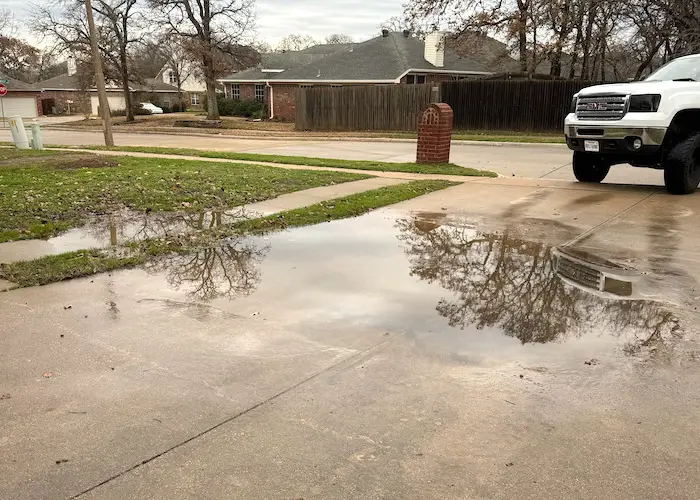
Heavy rain, melting snow, leaking downspouts, and poor drainage can slowly wash soil away beneath a slab. As material disappears, empty spaces—known as voids—develop underneath the concrete.
Eventually, the slab no longer has enough support and begins to settle.
Common sources of erosion include:
- Downspouts that discharge beside concrete
- Overflowing gutters
- Poor yard drainage
- Plumbing leaks
- Sprinkler systems
- Heavy rainfall
- Melting snow and ice
This is why sinking concrete is often found near driveways, sidewalks, garage entrances, patios, and foundation edges.
Michigan’s Freeze-Thaw Cycles
Michigan weather is especially hard on concrete.
As temperatures fluctuate, water enters small spaces beneath and around the slab. When it freezes, it expands. As it thaws, the soil shifts again.
This constant freeze-thaw cycle can:
- Create new voids
- Weaken supporting soil
- Accelerate settlement
- Cause cracking
- Push slabs out of alignment
Over many winters, even well-built concrete can begin to move if the supporting soil changes.
Heavy Traffic and Daily Use
Concrete carries a tremendous amount of weight every day.
Cars, pickup trucks, RVs, delivery vehicles, dumpsters, and equipment all transfer pressure to the soil beneath the slab.
If the supporting base is already weak, that repeated weight gradually compresses the soil and speeds up settlement.
This is especially common on:
- Residential driveways
- Commercial parking lots
- Warehouse floors
- Loading docks
- Dumpster pads
- Sidewalk crossings
Expanding and Shrinking Soil
Some soil types naturally expand when they’re wet and shrink as they dry out.
Clay soils are especially susceptible to this cycle.
As moisture levels change throughout the year, the ground beneath the slab moves with it. After years of expansion and contraction, the concrete can begin to crack, shift, or settle unevenly.
Signs Your Concrete May Be Sinking
Concrete settlement usually develops gradually, making it easy to overlook at first.
Watch for signs like:
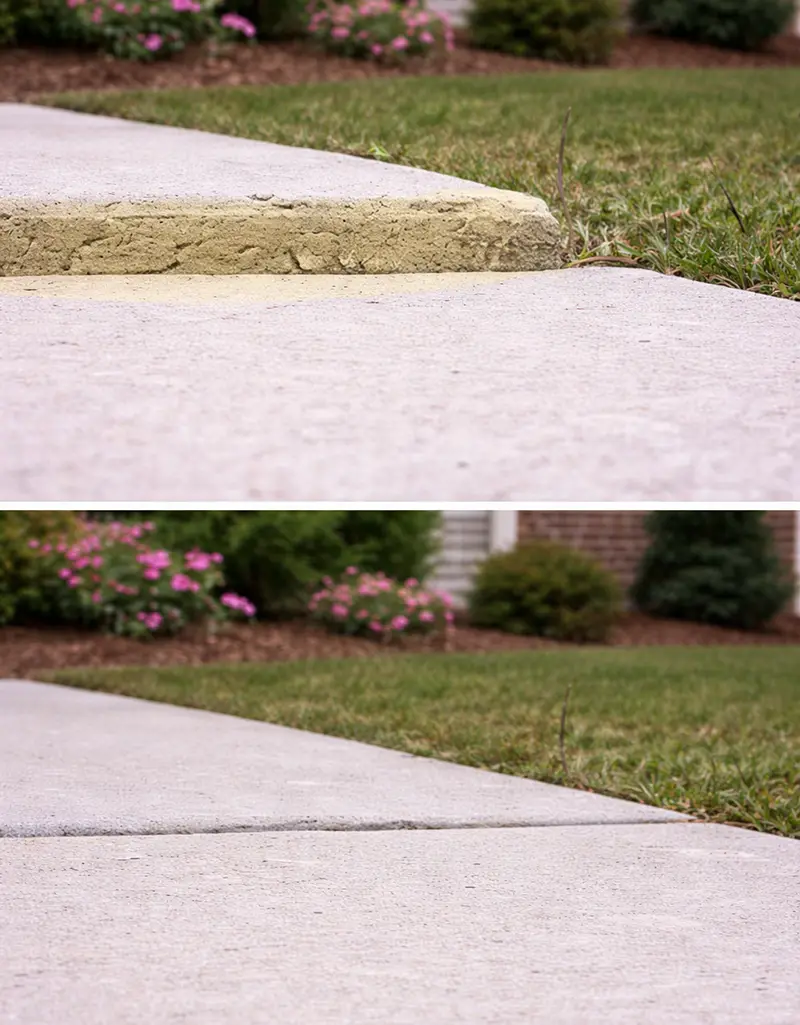
- Uneven or raised slab edges
- Trip hazards
- Water pooling after rain
- Cracks in the concrete
- Sunken corners
- Gaps beneath slabs
- Tilting patios
- Driveways pulling away from the garage
- Front steps separating from the home
Even a small height difference can continue growing if the soil underneath remains unstable.
Does Sinking Concrete Need to Be Replaced?
Not always.
One of the biggest misconceptions is that uneven concrete automatically means complete replacement.
In many situations, the slab itself is still in excellent condition. The real issue is the unstable soil underneath.
Replacing the concrete without addressing that underlying problem can allow the new slab to settle again over time.
That’s why many homeowners today choose polyurethane concrete lifting instead.
How Polyurethane Concrete Lifting Works
Rather than removing the concrete, polyurethane lifting restores the support beneath it.
The process is simple:
1. Drill Small Holes
Small holes—typically about 5/8 inch—are drilled into the affected slab.
2. Inject High-Density Polyurethane Foam
Specialized polyurethane foam is injected beneath the concrete. As it expands, it fills empty spaces, strengthens weak soil, and gently lifts the slab back toward its original position.
3. Patch & Clean Up
The access holes are patched, the work area is cleaned, and in most cases the concrete is ready to use the same day.
Why Early Repairs Matter
Concrete settlement rarely stops on its own.
As soil movement and water continue affecting the slab, the problem usually becomes larger and more expensive to repair.
Waiting too long can lead to:
- Larger trip hazards
- Additional cracking
- Drainage problems
- Damage to adjoining concrete
- Increased repair costs
- Greater safety concerns
Addressing the problem early often saves both time and money.
Every Concrete Problem Has a Different Cause
No two settlement problems are exactly alike.
The underlying cause may involve:
- Soil conditions
- Drainage problems
- Water intrusion
- Freeze-thaw movement
- Construction methods
- Heavy traffic
- Age of the concrete
That’s why it’s important to identify what’s happening beneath the slab—not just what you can see on the surface.
Restore Your Concrete Without Replacing It
Sinking concrete doesn’t always mean you need new concrete.
In many cases, the existing slab can be lifted, stabilized, and restored using modern polyurethane foam injection. By correcting the problem below the surface, homeowners can improve safety, restore curb appeal, and extend the life of their concrete without the expense and disruption of replacement.
If you’ve noticed uneven concrete around your home, Lift Rite Leveling is here to help. We proudly serve homeowners throughout Saginaw, Flushing, Midland, Bay City, Flint, and surrounding Mid-Michigan communities with fast, reliable polyurethane concrete lifting solutions.
0/5
(0 Reviews)